Seasonal Light Cycles and Their Ties to Stamina Management in Stockholm Area Hold'em Gatherings
Alex Brooks · Nov 5, 2026
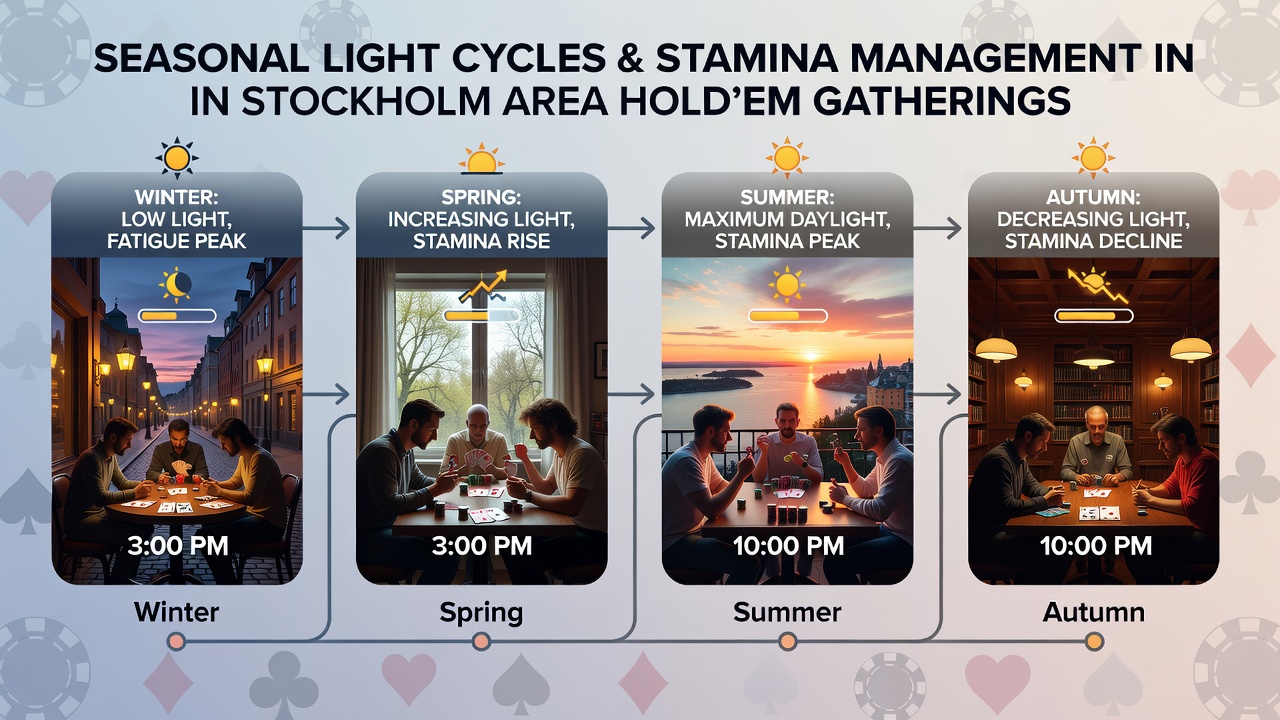
Seasonal Light Cycles and Their Ties to Stamina Management in Stockholm Area Hold'em Gatherings
Stockholm experiences pronounced shifts in daylight hours across the calendar year, and these changes align with documented patterns in participant endurance during area hold'em events. Data from the Swedish Meteorological and Hydrological Institute shows that November daylight averages roughly seven hours, whereas June stretches beyond eighteen hours, creating measurable contrasts in ambient light exposure for residents adn visitors alike. Researchers at Karolinska Institutet have tracked how reduced morning light in late autumn correlates with adjustments in melatonin onset, which in turn influences sustained attention spans over multi-hour sessions common in local card rooms.
Hold'em gatherings in the Stockholm vicinity often extend into the early morning, and players report structured approaches to pacing energy when natural light cues weaken. Observers note that venues in central districts adjust interior illumination to compensate, yet external light cycles still register through windows and travel routines. A 2024 report from the European Society for Sleep Research indicated that individuals in northern latitudes exhibit modest declines in reaction time accuracy after successive days of abbreviated daylight, a factor that intersects with decision sequences required in extended poker play.
Daylight Patterns and Circadian Alignment in teh Region
Latitude places Stockholm near 59 degrees north, where solar angle produces rapid transitions between seasons rather than gradual ones. Meteorological records confirm that civil twilight begins after 3 p.m. by mid-November 2026, compressing usable daylight for afternoon arrivals at gaming sites. Studies conducted through the University of Helsinki's chronobiology unit demonstrate that such compression shifts peak alertness windows earlier for some participants while delaying them for others, depending on individual sleep history and commute duration. Those who study these rhythms find that consistent exposure to low-intensity light during evening travel can blunt the amplitude of the circadian drive, prompting players to incorporate timed rest intervals between tournament levels.
Local regulations on venue operating hours remain stable year-round, yet attendance logs from several clubs reveal attendance peaks shifting toward weekend afternoons when natural light still lingers. Data compiled by the Nordic Gaming Association shows a 12 percent increase in multi-table session lengths during the darkest months, suggesting participants extend play to maximize limited evening hours before full darkness sets in.
Stamina Factors Observed in Hold'em Settings
Hold'em formats emphasize continuous cognitive load through betting rounds, pot odds calculations, and opponent reading, all of which draw on attentional resources sensitive to light-mediated sleep pressure. Evidence from a 2025 joint study by the Canadian Centre for Occupational Health and Safety and the Stockholm University psychology department found that simulated night-shift conditions reduced accuracy in probabilistic tasks by measurable margins after six consecutive hours. Applied to card-room environments, this translates to observed increases in voluntary breaks or hydration pauses as ambient outdoor light falls below threshold levels around 4 p.m. in November.
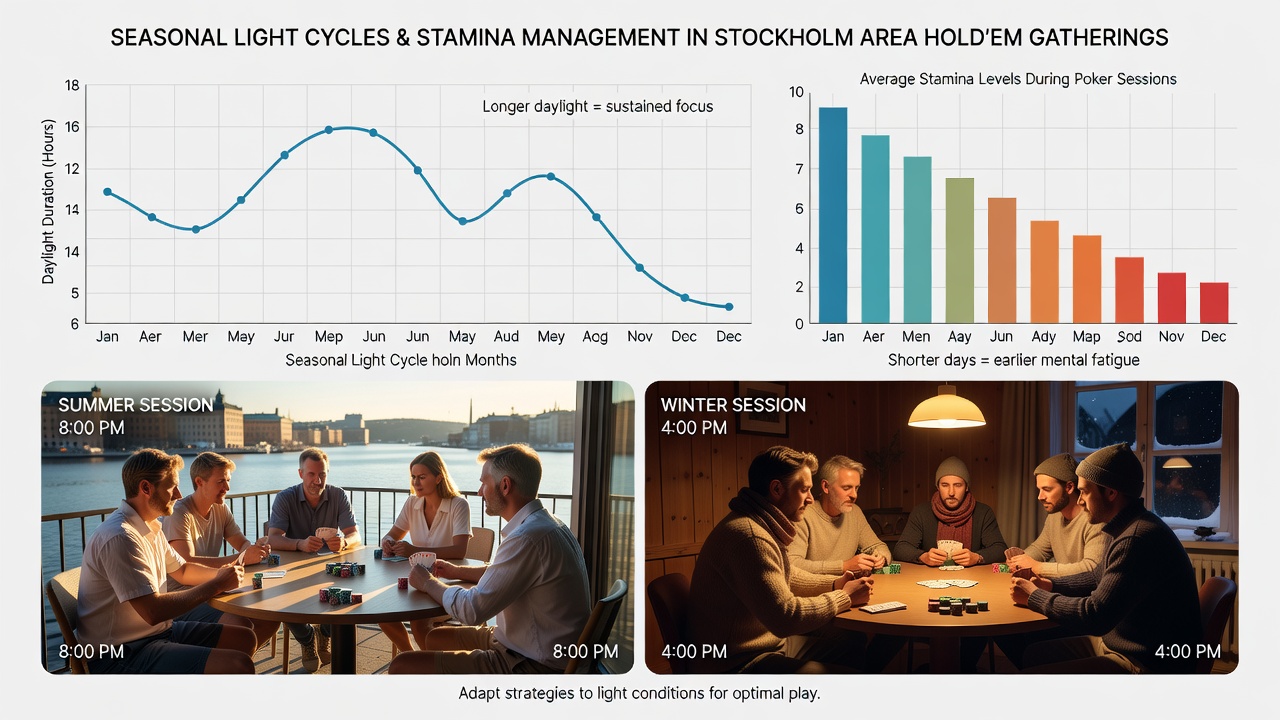
Venues frequently supply supplemental spectrum lighting calibrated to 5000K, yet external cues such as streetlights and seasonal cloud cover continue to affect entrainment. Participants who maintain fixed wake times regardless of daylight duration show steadier performance metrics across series, according to aggregated results from regional performance tracking apps used by regulars. Conversely, those whose schedules drift with sunset times encounter cumulative sleep debt that surfaces as longer decision latencies in later tournament stages.
Practical Adjustments Documented Among Regulars
Many Stockholm-area players adopt protocols that include morning light exposure walks before sessions, a tactic supported by findings from the Australian Sleep Health Foundation on phase-shifting benefits. Others schedule caffeine intake relative to civil dawn rather than clock time, aligning stimulant effects with natural cortisol peaks that shorten in winter. Club networks share anonymized session data indicating that groups employing these timing strategies maintain higher average stack preservation rates through midnight hours compared with control cohorts.
Travel between venues also factors into stamina equations, since public transit schedules contract alongside daylight. November 2026 timetables from Storstockholms Lokaltrafik list reduced late-evening frequencies on several lines serving suburban card rooms, prompting some participants to consolidate play at central locations or arrange shared rides to preserve rest windows.
Conclusion
Seasonal light variation in the Stockholm region intersects with hold'em gathering logistics through measurable effects on circadian timing and sustained attention. Records from meteorological agencies, sleep research centers, and gaming associations document consistent patterns that participants address through deliberate scheduling of rest, light exposure, and session pacing. As November 2026 progresses with its abbreviated days, these management practices continue to shape how area players structure their involvement in local events.